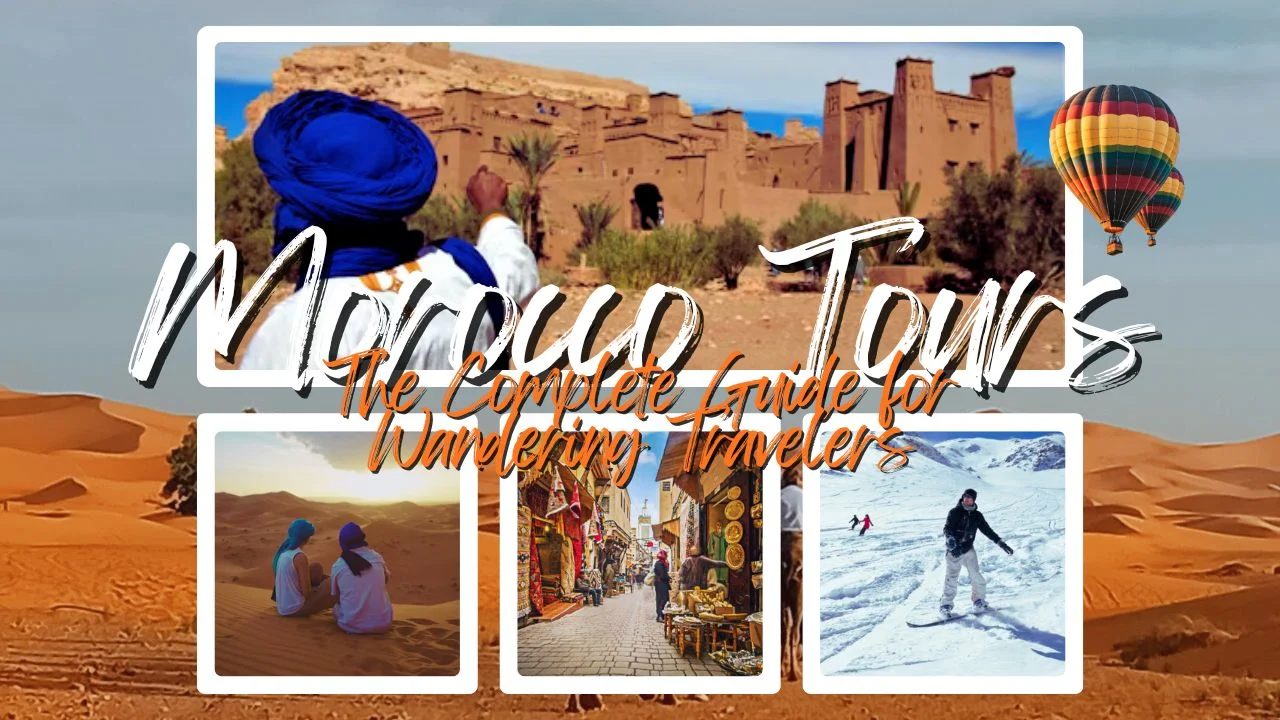
Morocco has always captivated adventurous spirits, but in 2026, the desire for authentic, meaningful travel has never been stronger. The modern traveler seeks more than just a checklist of sights; they yearn for genuine connection, cultural understanding, and unique stories. This is where the power of a Morocco local tour truly shines. Going beyond standard sightseeing, local tours offer an unparalleled gateway into the heart of this North African kingdom, transforming a simple vacation into a deep, respectful immersion. This guide is designed to answer your most pressing questions—from safety and etiquette to finding the best local guides—and reveal how partnering with local experts can unlock the authentic soul of Morocco.
Why “Local” Makes All the Difference
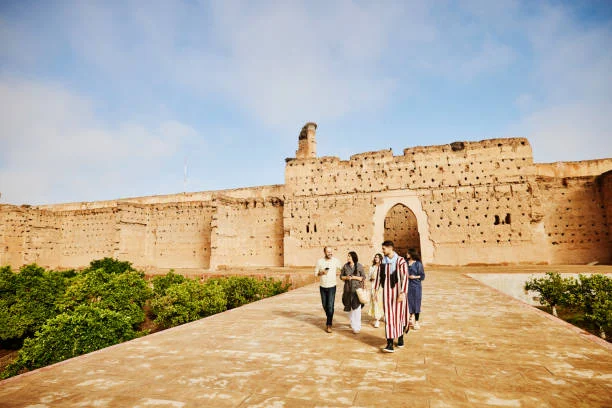
At its core, traveling with a local guide is about context. It’s the difference between looking at a 500-year-old palace wall and hearing the family stories and historical intrigues that bring its stones to life. A knowledgeable local does more than navigate; they translate—not just language, but customs, unspoken social rules, and the subtle rhythms of daily life. They can lead you past the tourist-centric stalls to the artisan whose family has crafted pottery the same way for generations, or to a hidden courtyard café unknown to guidebooks.
This insider access is invaluable for navigating Morocco’s vibrant but sometimes overwhelming medinas, understanding complex social etiquette, and making choices that are both respectful to the culture and enriching for you. In a country as diverse and layered as Morocco, a local guide isn’t a luxury; they’re your key to a richer, smoother, and far more rewarding adventure.
Understanding Safety in Morocco for Travelers
Safety is a paramount concern for any traveler, and perceptions of Morocco can vary widely. It’s essential to separate fact from fiction to make informed decisions.
The Official Advisories and On-the-Ground Reality
The U.S. State Department currently classifies Morocco at “Level 2: Exercise Increased Caution,” primarily due to the threat of terrorism. It’s crucial to take this advisory seriously, but context is key. This is the same level assigned to many popular European destinations like France, Germany, and Italy.
In reality, Morocco is considered one of the safer countries in the region. Violent crime against tourists is rare, and the country benefits from a stable government and significant investment in tourist security. The most recent major terrorist incident occurred in 2018, and the country’s security services, such as the effective BCIJ (often called the “Moroccan FBI”), are highly regarded for counter-terrorism efforts. As Lucas Peters, a long-time resident and author, notes, “Morocco has consistently been an incredibly safe destination for travelers”.
Practical Safety: Navigating Scams and Petty Crime
For most visitors, the primary safety concerns are not violent crime but financial scams and persistent hassle. Being aware of common tactics is your best defense.
- The “Faux Guide”: Individuals may approach you in medinas claiming a main route is closed or offering unsolicited guiding services. The goal is to lead you to a shop for a commission or demand payment. The fix: Politely but firmly decline without stopping. A simple “La, shukran” (No, thank you) and continuing to walk with purpose is most effective.
- The “Free” Gift Trap: Someone may place a bracelet on your wrist or begin drawing henna, calling it a gift, then aggressively demand payment. The fix: Keep your hands to yourself and be clear from the start. If they persist, a firm “Safi!” (Enough!) can help.
- Transport and Money Scams: Always ensure taxi drivers use their meter (“compteur”) or agree on a price before the ride begins. Be mindful of your belongings in crowded areas like the Jemaa el-Fnaa square or in the souks, as pickpocketing can occur.
Pro Tip: One of the most significant safety advantages of a booked local tour is having a trusted driver and guide. They act as a cultural buffer, navigate logistical challenges, and provide 24/7 local support, allowing you to relax and immerse yourself in the experience without constant vigilance.
For the most current and detailed analysis, especially for American travelers, consult our detailed safety guide for American tourists.
Cultural Etiquette and Dress Code: Traveling with Respect
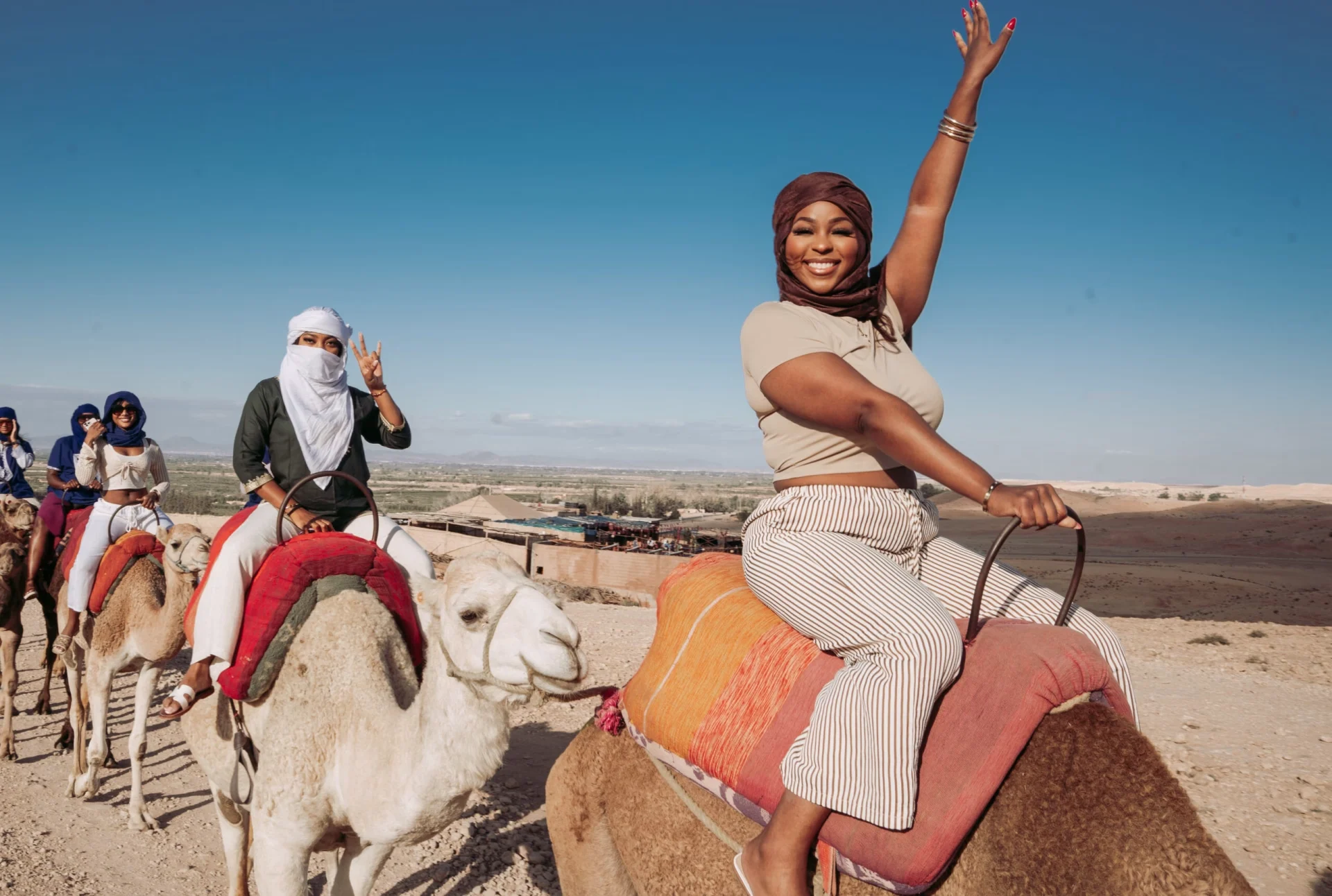
Respecting local customs is non-negotiable for the conscientious traveler. It’s a sign of respect that opens doors to warmer interactions and more authentic experiences.
Demystifying the Dress Code
Morocco does not have a legally enforced dress code for tourists, but it is a modest, Muslim-majority country. Dressing appropriately is one of the most straightforward ways to show respect, reduce unwanted attention, and feel more comfortable blending in.
The key principle is modesty. This generally means covering shoulders, cleavage, and knees. Clothing should be loose-fitting rather than tight.
- For Women: Pack lightweight, breathable fabrics like linen and cotton. Excellent options include maxi dresses or skirts, loose trousers, and long-sleeved tunics. A lightweight scarf is a versatile essential—it can cover shoulders when entering religious sites or provide sun protection. While shorts and sleeveless tops are common in coastal resort areas, you will feel more comfortable and draw less attention in more covered attire, especially in medinas, rural areas, and smaller towns.
- For Men: While Moroccan men rarely wear shorts in cities (opting for trousers), tourist shorts are generally acceptable. However, you may feel better dressed and more respectful in knee-length shorts or lightweight pants. Avoid sleeveless shirts, especially outside beach areas.
For dress guidance and cultural expectations, see our detailed guide on:👉 what women should wear in Morocco?
Climate is a major factor. Morocco’s weather varies dramatically from the snowy Atlas Mountains to the scorching Sahara. The secret is layering. This allows you to adapt to temperature changes throughout the day and between regions. 👉see our detailed guide on: Morocco: Weather and Seasonal Secrets.
For a complete seasonal packing list and deeper insights, see our comprehensive guide on what to wear in Morocco.
Essential Cultural “Dos and Don’ts”
Beyond clothing, a few key points of etiquette will smooth your journey:
- The Left Hand: In Moroccan and Islamic tradition, the left hand is considered unclean. Always use your right hand for eating, shaking hands, and exchanging money or gifts.
- Public Displays of Affection: These are frowned upon. Couples should avoid kissing or intimate touching in public.
- Photography: Always ask for permission before photographing people, especially women. It is respectful and often appreciated.
- Haggling: In souks (markets), haggling is expected and part of the cultural experience. Do so with a smile and good humor, but be respectful. If you are not interested in buying, a polite but clear “No, thank you” is best.
- Religious Sensitivity: During the holy month of Ramadan, be discreet about eating, drinking, or smoking in public during daylight hours. Non-Muslims are not allowed to enter most mosques in Morocco, with a few notable exceptions like the Hassan II Mosque in Casablanca.
For a full list of social norms, our article on essential dos and don’ts for American visitors is an invaluable resource.
Guided Tour vs. Independent Travel: Finding Your Perfect Fit
Choosing how to explore Morocco is a personal decision. Here’s a comparison to help you decide.
The Case for Local Guided Tours
For travelers seeking authenticity without the anxiety, local tours offer the ideal balance. You trade a degree of spontaneity for profound depth and seamless logistics. This is particularly valuable in Morocco, where language barriers, complex geography, and cultural subtleties can be challenging to navigate alone. A local guide transforms potential friction points—like a confusing medina lane or a misunderstood custom—into moments of learning and connection.
The Heart of the Journey: Types of Local Tours to Discover
The beauty of Morocco is its incredible diversity, and local tours are the best way to experience each facet authentically.
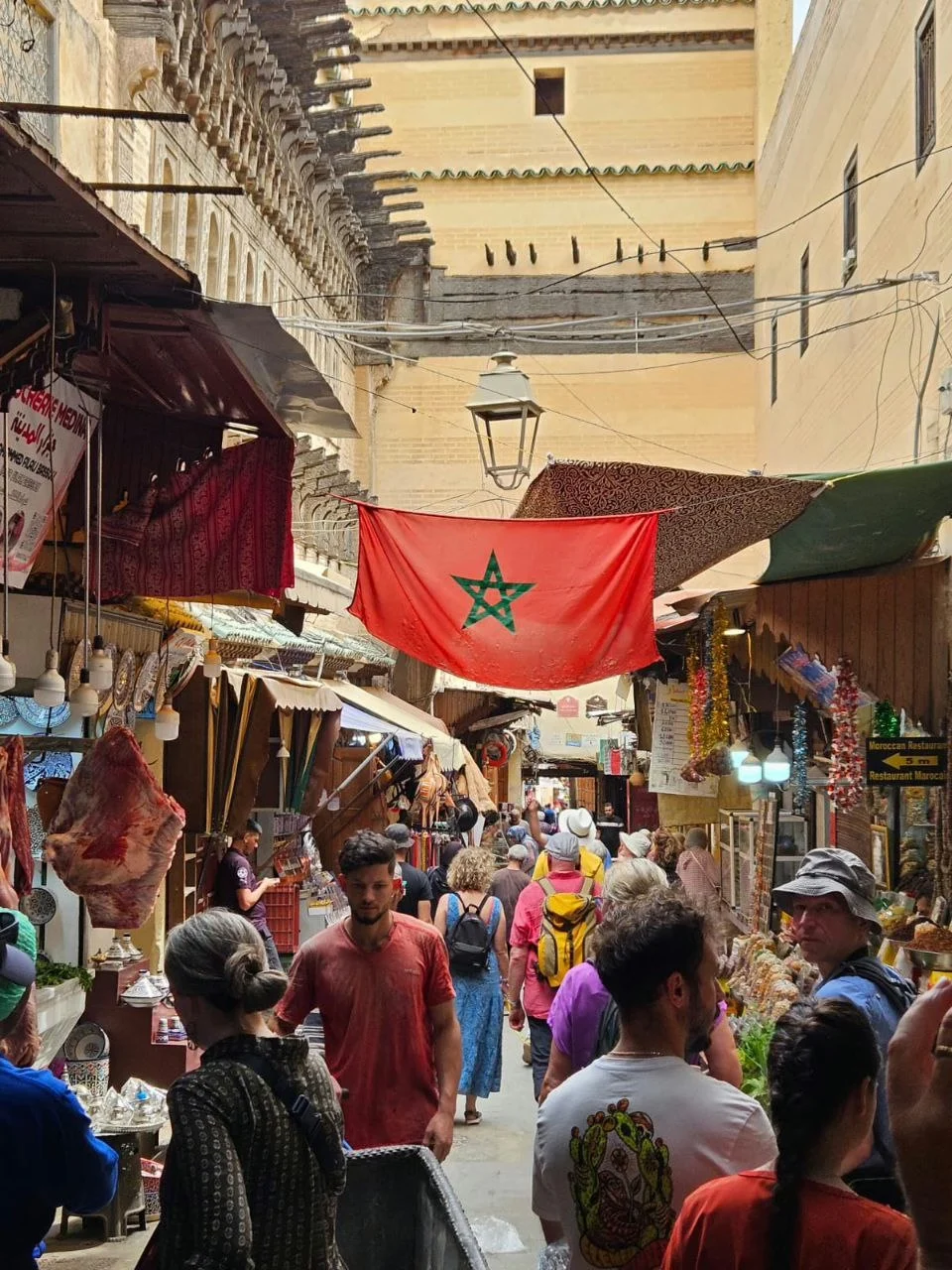
1. Urban Immersion & Cultural Tours
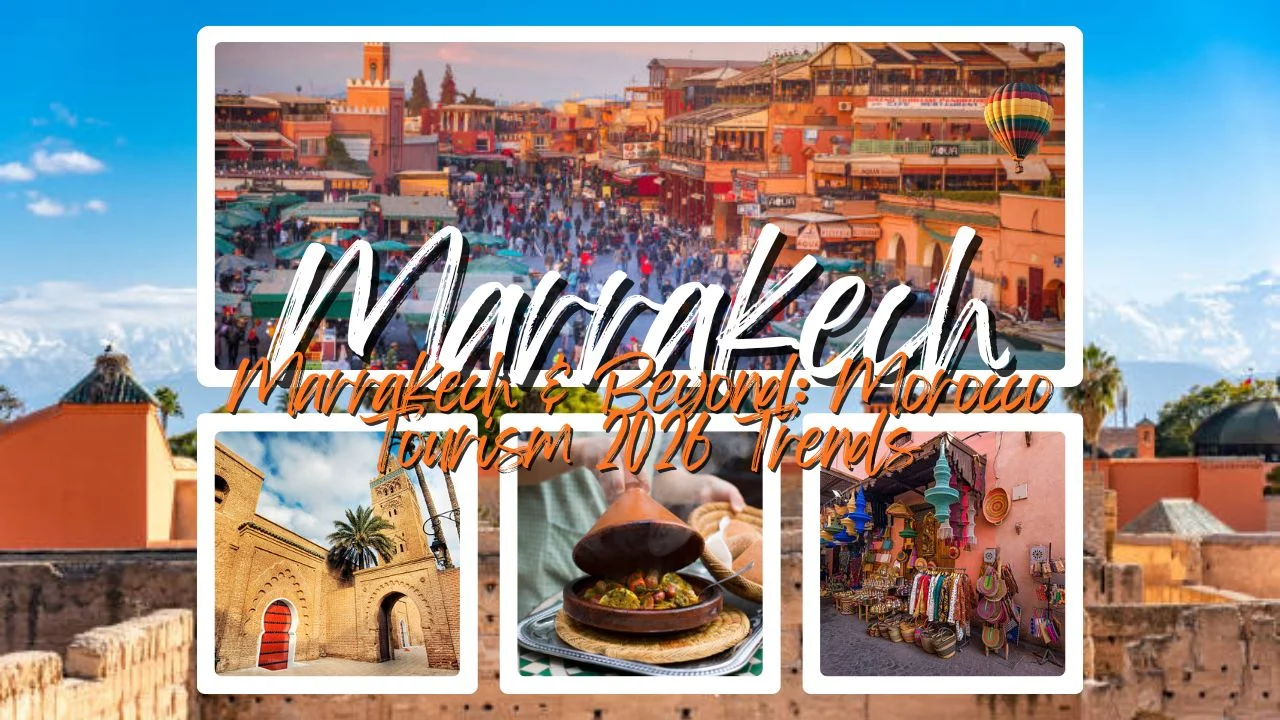
- Marrakech: Beyond the main square, explore the hidden palaces (palais), secret gardens, and specialized souks with a guide who knows every alley. A local can explain the symbolism in the architecture and introduce you to a master mosaicist.
- Fes: Navigating the world’s largest contiguous medina is a daunting task. A local guide is essential to find the historic tanneries, Quranic schools (medersas), and to understand the city’s ancient scholarly heritage.
- Casablanca & Rabat: Discover the art deco history of Casablanca and the regal political capital of Rabat. A private day trip from Casablanca to Rabat offers a perfect contrast between Morocco’s economic powerhouse and its administrative heart.
2. Desert & Mountain Adventures
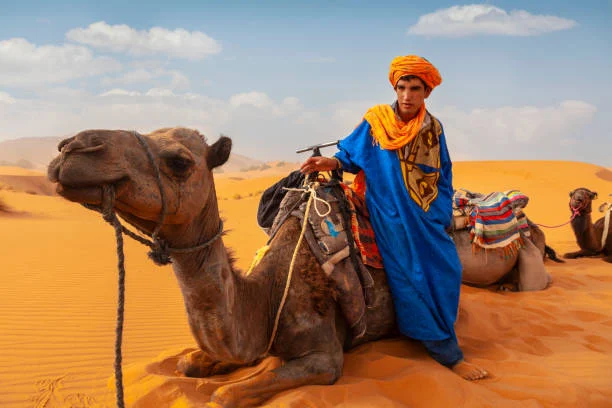
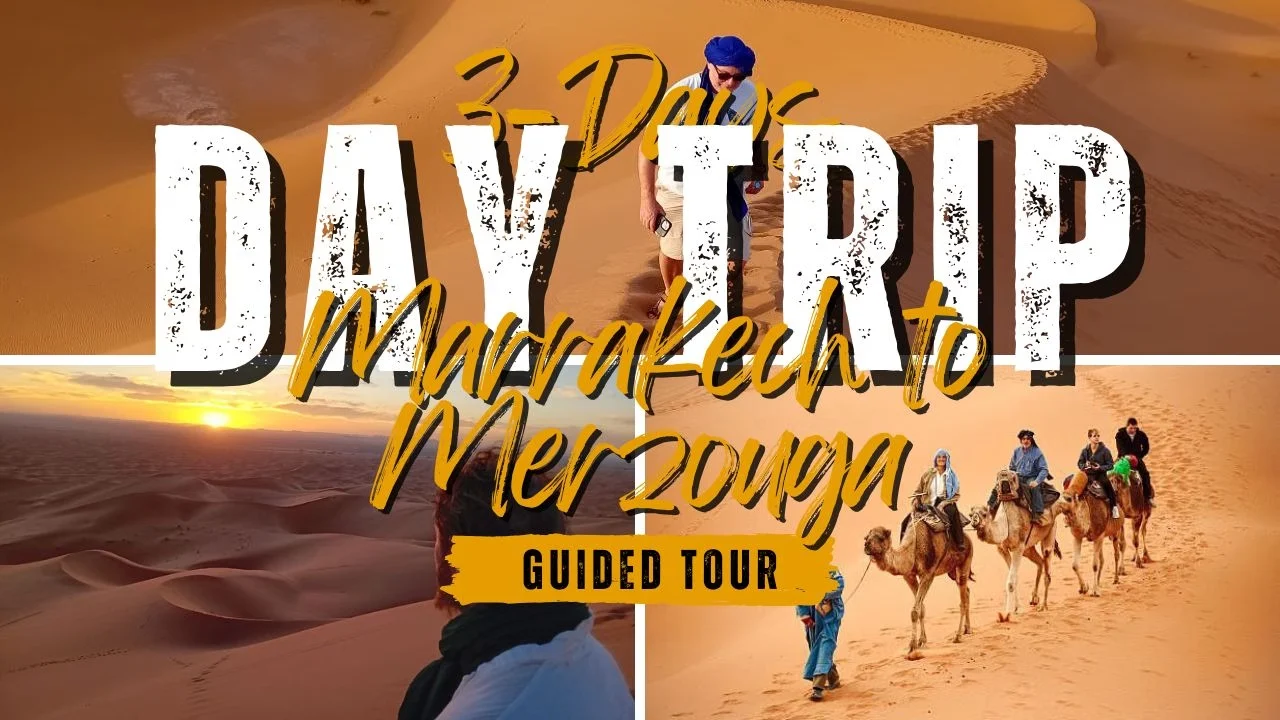
- Sahara Desert Tours: The journey from Fes or Marrakech to the dunes of Merzouga or Zagora is an adventure in itself. A reputable local operator ensures safe, knowledgeable 4×4 travel through dramatic landscapes, authentic Berber camp stays, and culturally sensitive interactions with desert communities. Compare desert tour operators from Fes to Sahara carefully, looking for those employing local Saharan guides.
- Atlas Mountains Treks: For hiking, nothing beats a guide from a local Berber village. They know the trails, the weather patterns, and can arrange authentic homestays. When considering a multi-day trek in the Atlas Mountains, a local guide is indispensable for safety and cultural translation.
3. Culinary & Sensory Experiences
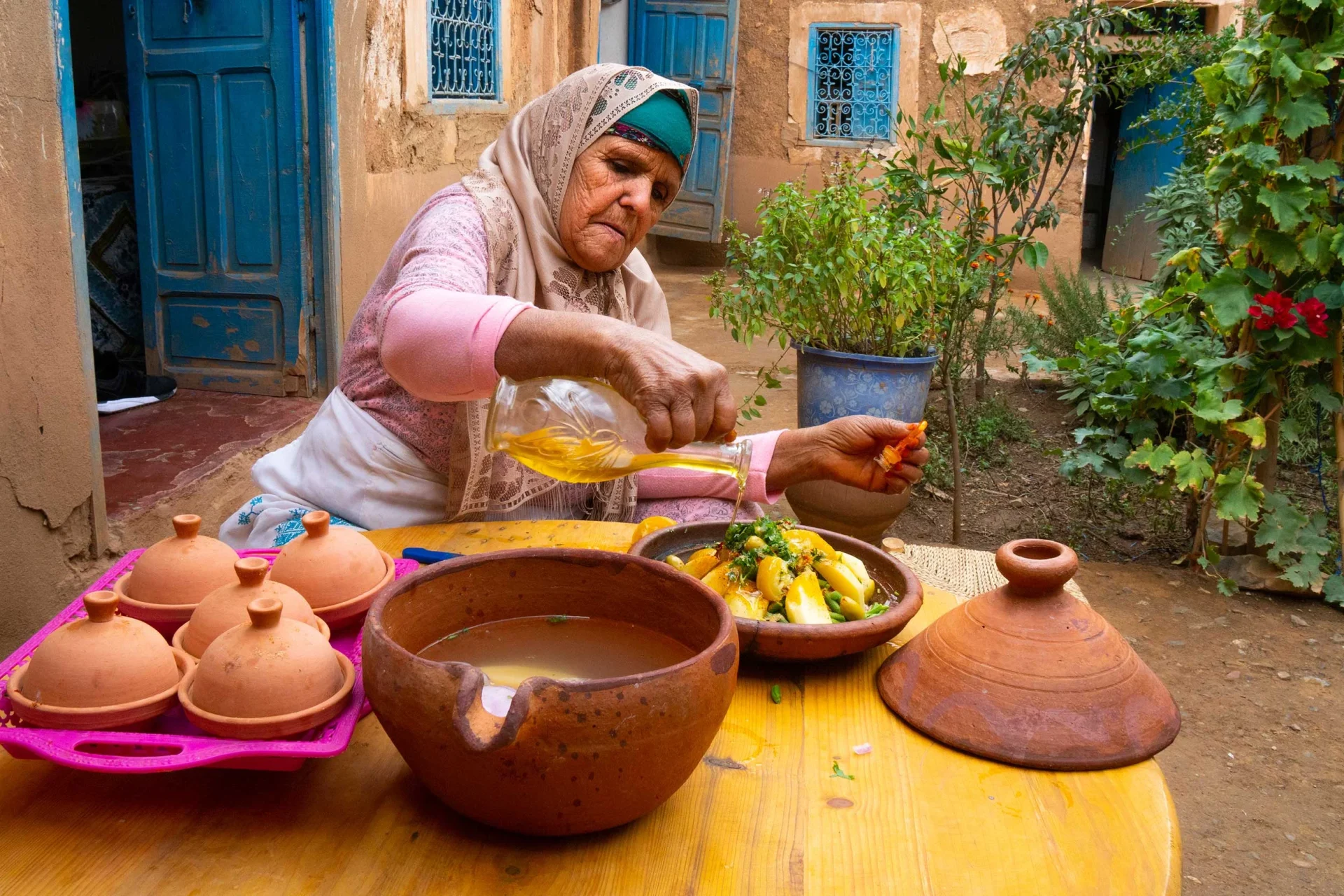
Moroccan cuisine is a national treasure. Local food tours move past restaurant fare to include:
- Market visits where your guide selects the freshest spices and ingredients.
- Hands-on Moroccan cooking classes in a local home or riad.
- Street food safaris in the evening, sampling delicacies you might hesitate to try alone.
Booking Your Authentic Local Tour: A Practical Guide
How to Identify a Reputable Local Operator
- Look for Specialization: The best guides often focus on a specific region (e.g., the Sahara, the Atlas Mountains, Fes medina). Their deep, localized knowledge is invaluable.
- Verify Credentials: In Morocco, official tour guides are licensed by the Ministry of Tourism. Don’t hesitate to ask for proof of license.
- Seek Personal Connection: Read past client reviews not just for star ratings, but for descriptions of the guide’s personality, flexibility, and depth of knowledge.
- Ask Direct Questions: A good operator will be transparent about itineraries, group sizes, what’s included, and the background of your guide.
- Prioritize Sustainability: Support companies that employ local guides, use local services, and demonstrate respect for cultural and environmental preservation.
Practical Travel Essentials for 2026
- Visas & Entry: U.S., Canadian, UK, EU, and Australian citizens do not need a visa for tourist stays of up to 90 days. A passport with at least six months’ validity is required.
- Money: The currency is the Moroccan Dirham (MAD). It is a closed currency, meaning you can only obtain it within Morocco. Use ATMs (found widely in cities) for the best rates, and always have small bills for tips and taxis.
- Health: Drink only bottled or purified water. Consider vaccinations for Hepatitis A and Typhoid. Carry anti-diarrheal medication as a precaution.
- Connectivity: Morocco has excellent 4G coverage in cities and major towns. Purchasing a local SIM card (from Maroc Telecom, Orange, or Inwi) at the airport is inexpensive and highly recommended. 👉see our detailed guide on: Morocco Travel Advisory 2026.
Conclusion: Your Morocco, Authentically Unlocked
Morocco is a country that rewards the curious and the respectful. While independent travel offers freedom, the path to the country’s true soul is often walked with a local. A Morocco local tour in 2026 is not about being shepherded from point A to point B; it’s about having a cultural bridge, a knowledgeable friend, and a guardian of your time and experience.
By choosing to explore with a local expert, you invest in more than a vacation—you invest in understanding. You replace confusion with clarity, observation with participation, and sightseeing with storytelling. You leave not just with photographs, but with a genuine feel for the rhythm, warmth, and breathtaking beauty of Morocco.
Ready to start planning your authentic journey? Explore our curated Morocco tour packages for 2026/2027, designed with the wandering traveler in mind, or dive deeper into the philosophy of authentic travel experiences with local guides.
Ready to start? Explore our Morocco Day Trips to kickstart your planning.
Frequently Asked Questions (FAQ)
Is Morocco safe for solo female travelers?
Yes, many women travel solo in Morocco. However, it requires extra vigilance. Dressing modestly, avoiding isolated areas at night, and using trusted transport are key. Hiring a local female guide for parts of your trip can greatly enhance comfort and provide unique insights.
How many days are enough for a trip to Morocco?
For a first-time visit covering the imperial cities (Marrakech, Fes) and one major region (e.g., the Sahara or the Atlas Mountains), 10-14 days is ideal. A 7-day trip can focus on one or two cities and a shorter excursion.
Can I tour Morocco on my own without a guide?
Absolutely. Morocco has good tourist infrastructure with trains and buses connecting major cities. However, for exploring medinas, the desert, or the mountains, hiring local guides for specific day tours is highly recommended to enhance your experience and ease navigation.
What is the best time of year to visit Morocco?
The spring (April-May) and fall (September-October) offer the most universally pleasant weather across the country, with warm days and cool nights. Summers can be extremely hot, especially inland and in the desert, while winters are mild in cities but cold in the mountains and desert at night.
Are local tours in Morocco expensive?
Costs vary widely based on group size, luxury level, and trip length. While more expensive than a bare-bones independent budget, local tours often provide excellent value by bundling guides, transport, and unique access. They also prevent costly logistical mistakes.
For more inspiration and to begin crafting your personalized adventure, browse all our available tours and trips.