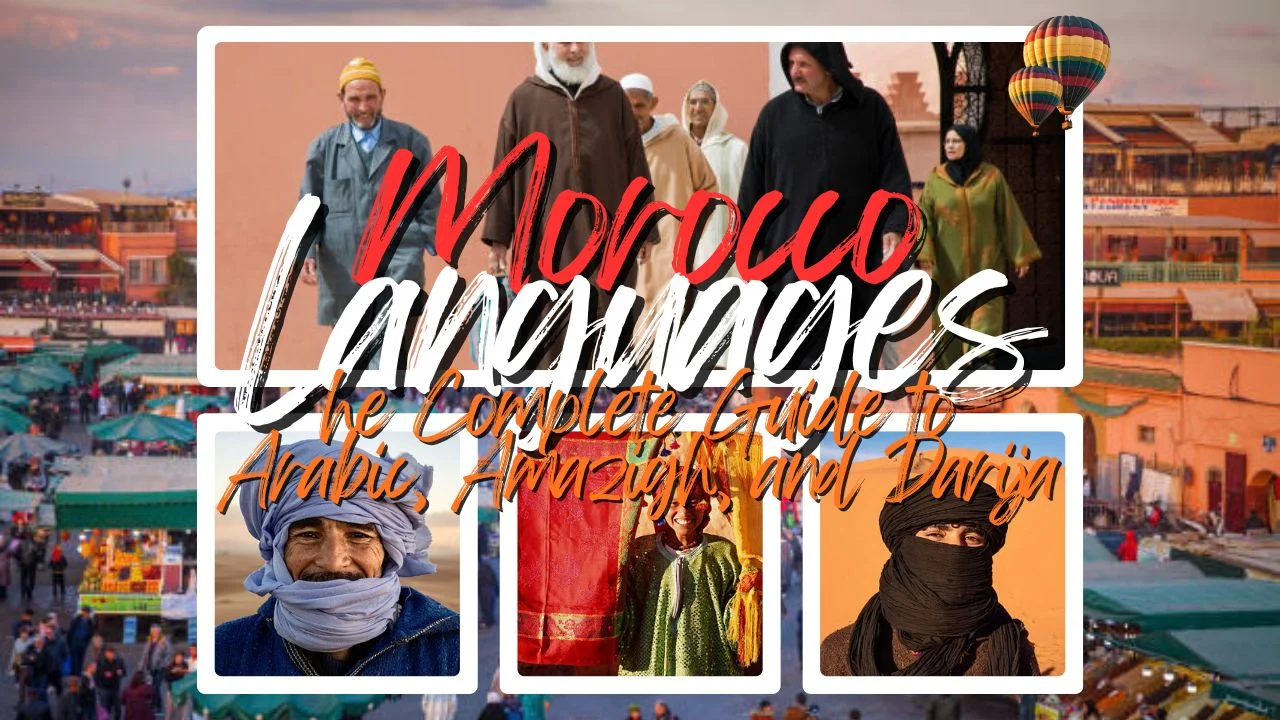
Moroccan Languages: A Tapestry of Tongues
If you are planning a trip to Morocco or Al Maghreb/Amurakouch or simply studying North African culture, you have likely asked: What is the official language of Morocco? The answer is surprisingly complex.
Morocco is not a monolingual country. It is a vibrant multilingual society where history, colonization, and indigenous identity have created a unique linguistic landscape. Walk through the medina of Marrakech, and you might hear vendors bargaining in Darija (Moroccan Arabic/Amazigh Mix), turn a corner to hear a radio broadcast in French, and travel north to hear conversations fluid in Spanish. Simultaneously, in the Atlas Mountains, the ancient Amazigh language (Berber) rings out.
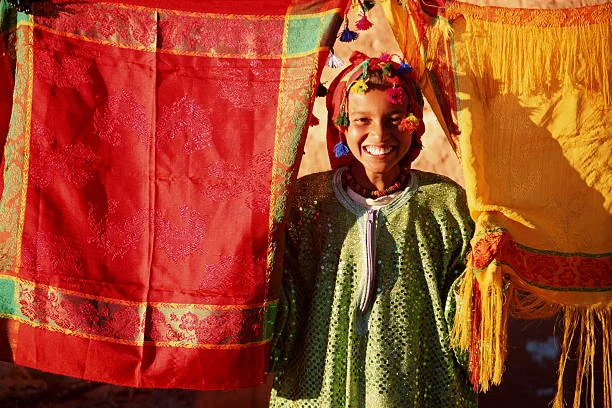
Understanding the languages in Morocco is more than a vocabulary lesson; it is the key to understanding the country’s soul. This guide breaks down the difference between Modern Standard Arabic and Darija, explains the resurgence of the native Amazigh language, and details why French and Spanish remain dominant in business and tourism.
What is the Official Language of Morocco?
For decades, the answer to “what is Morocco’s official language?” was simple: Arabic. However, the legal landscape has changed significantly in recent years.
The Two Official Languages
According to the 2011 Constitution—which was further strengthened by a landmark language law in 2019—Morocco recognizes two official languages:
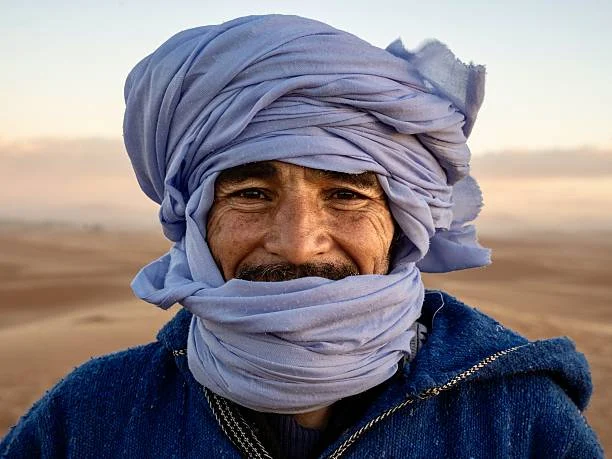
- Arabic: The constitutional and historical official language.
- Amazigh (Tamazight): Recognized as an official language alongside Arabic in 2011, with the 2019 law mandating its integration into public life, education, and administration.
This distinction is crucial. While Arabic has long been the language of government and law, the recognizing of the Amazigh Language and Culture was a significant victory for the indigenous people, who not only make up the majority of the population but also represent the ancestral roots and Berber lineage of Morocco.
Modern Standard Arabic (MSA) vs. Darija
When we say Arabic is the official language, we are referring to Modern Standard Arabic (MSA).
- MSA: This is the formal language used in parliament, news broadcasts, literature, and legal documents. It is standardized across the Arab and Arabized countries.
- Darija: This is the spoken vernacular. It is the language of daily life, the souks, and the home which is a Mixture of Tamazight and Arabic also with some european words such as Spanish, French etc
Key Takeaway: If you learn Arabic in a university, you are learning MSA. If you land in Casablanca and try to speak it, locals will understand you, but they will reply in Darija—a dialect that incorporates French, Spanish, and Amazigh words, making it distinct from Middle Eastern dialects.
The Native Language of Morocco: Amazigh (Tamazight)
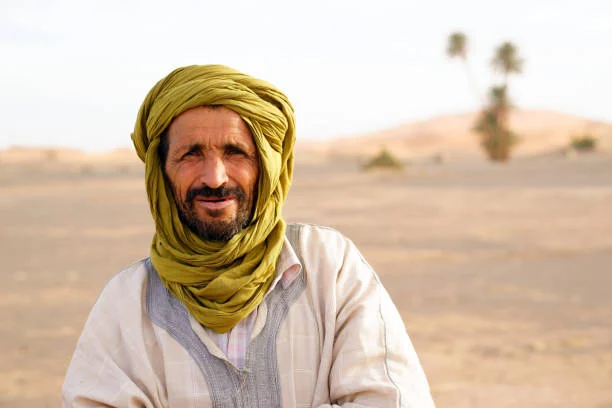
Long before the Arab arrival in the 7th century, the land was inhabited by the Imazighen (plural of Amazigh) and still. Consequently, Amazigh is the true native language of Morocco.
The Tifinagh Script
One of the most unique aspects of the Amazigh language in Morocco is its script: Tifinagh. You will see this ancient script on government buildings, road signs, and banknotes alongside Arabic. It is a fascinating visual reminder of Morocco’s pre-Arab influence.
The Three Major Dialects
Amazigh is not a single, uniform language. It is a family of dialects. In Morocco, there are three primary regional varieties:
- Tasousiste (Shelha): Predominantly spoken in the High Atlas and Anti-Atlas regions and the Souss valley (around Agadir). It has the highest number of speakers.
- Tamazight (Central Atlas Tamazight): Spoken in the Middle Atlas mountains (areas around Azrou and Khenifra).
- Tarifit (Rifian): Spoken in the Rif mountains in the far north (Tangier, Tetouan, Al Hoceima).
Why this matters: A speaker of Tarifit in the north may struggle to understand Tashelhit in the south without using Arabic or French as a bridge because of the accent and letters switching.
The Role of French: The Language of Business and Elite
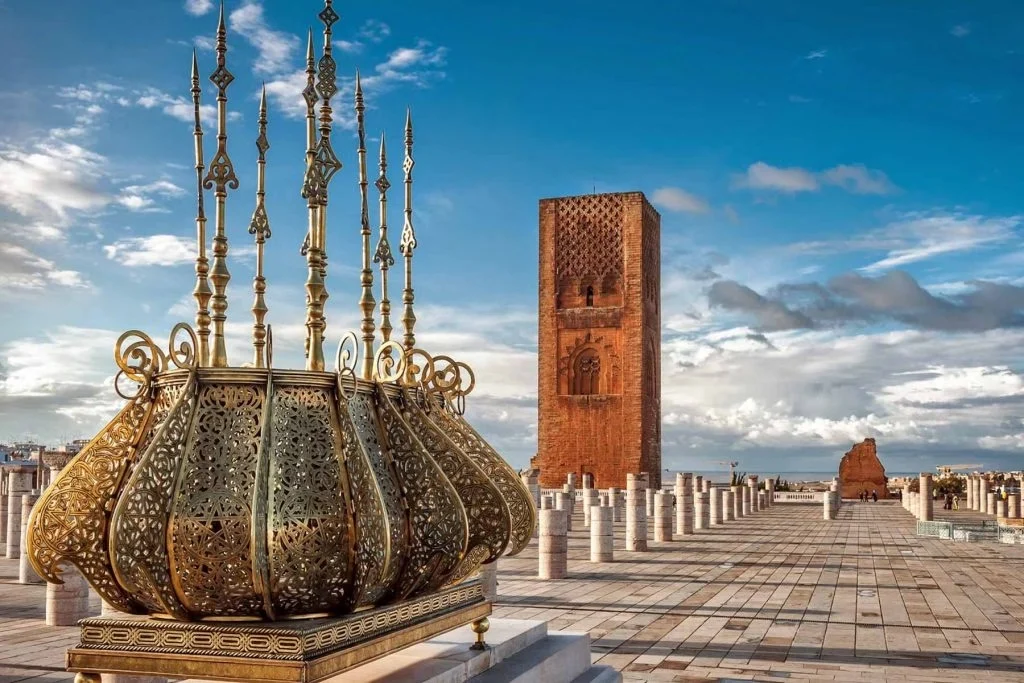
If you ask a local “Do you speak English?”, they often say “A little,” but then switch to flawless French.
French is not an official language de jure, but it is the de facto language of business, science, and economics. This legacy stems from the French Protectorate (1912–1956).
Where is French used?
- Administration: Government paperwork, banking, and legal contracts are often in French.
- Education: Science and math subjects in universities are frequently taught in French.
- Street Signs: In cities like Casablanca and Rabat, you will see French signage everywhere.
- Menus and Services: In high-end tourism, French is often the default language for service.
For travelers, French is your best bet (it was!) for navigating cities, ordering food, or handling logistics if you don’t speak Arabic but recently English is widely spoken by the new generation.
“Marruecos Language”: The Spanish Influence in the North
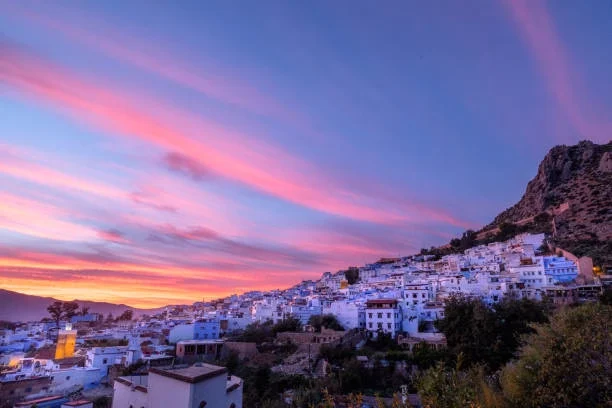
If you searched for “marruecos language,” you are likely aware of the deep historical ties between Morocco and Spain.
Spain controlled the northern and southern parts of Morocco (the Rif and Tarfaya regions) during the colonial era. Today, Spanish is widely spoken in the north.
- Cities: In Tangier, Tetouan, Chefchaouen, and Al Hoceima, Spanish is often more common than French.
- Tourism: Many Europeans from Spain visit the north for holidays, so the hospitality workforce there is fluent in Spanish.
- Media: You can find Spanish radio stations and television channels in northern Morocco.
If you are a Spanish speaker visiting the north, you will find it incredibly easy to communicate—often easier than in the southern parts of the country.
English in Morocco: The Rising Star
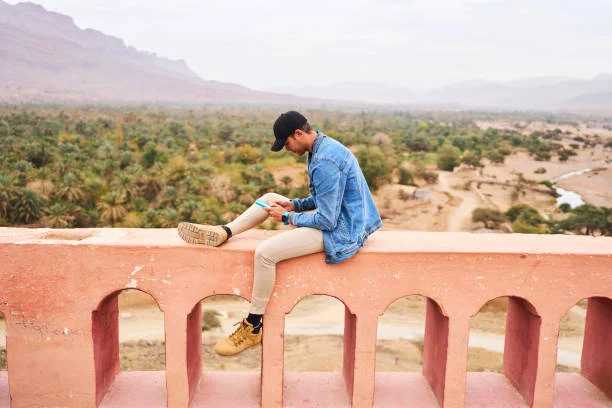
Is English the language for Morocco in the future? The answer is increasingly yes.
King Mohammed VI has made English education a priority to pivot Morocco toward global business and tourism, particularly with the US and Anglophone Africa.
- Youth: Young Moroccans are increasingly bilingual in Darija and English also in Tamazight, often preferring it over French.
- Tourism Hubs: In Marrakech, Agadir, and major hotels, English is spoken fluently.
- Call Centers: Morocco is a major hub for outsourcing for French and English-speaking companies, driving up English proficiency.
Morocco Languages Spoken: A Regional Breakdown
To help you prepare, here is a cheat sheet of what to expect where:
| Region | Dominant Local Language | Secondary/Colonial Language |
|---|---|---|
| Casablanca / Rabat | Darija | French (Dominant in business) |
| Marrakech | Darija | French / English (High tourism) |
| The North (Tangier/Tetouan) | Darija / Tarifit(Tamazight) | Spanish (Very Strong) |
| The Rif Mountains | Tarifit (Tamazight) | Spanish |
| Atlas Mountains | Tamazight / Tashelhit | Darija |
| The Sahara (South) | Hassaniya Arabic(with Tamazight) | Darija / French |
Practical Guide: Which Language Should You Learn?
If you are traveling to Morocco, you don’t need to be fluent. However, learning a few words of Darija will open doors that no other language can. Moroccans are incredibly hospitable, and hearing a visitor say “Salam Alaikum” (Peace be upon you) or “Choukran” (Thank you), (“Tanmirt” in Amazigh language) generates instant warmth.
Essential Darija Phrases for Travelers
- Salam Alaikum: Hello / Peace be upon you (The standard greeting).
- Labas: How are you? (Casual).
- Hamdoulilah: Thank God / I’m fine (The standard response to “How are you?”).
- Choukran: Thank you.
- Smaa liya: Excuse me / I’m sorry.
- Bghit: I want (Useful for shopping).
- Kam haadh?: How much is this?
- La / Ah: No / Yes.
English vs. French vs. Spanish: Which to use?
- Use Spanish: Only in the North (Tangier, Tetouan).
- Use French: In major cities for directions, menus, and taxis.
- Use English: In hotels, with young people, and in major tourist sites.
- Use Darija: Everywhere. Even if you only say “Salam,” it changes the dynamic of the interaction.
Frequently Asked Questions (FAQ)
Is Moroccan Arabic the same as Middle Eastern Arabic?
No. Moroccan Darija is heavily influenced by Amazigh language as it’s grammar based on it, French, and Spanish. While a speaker of Egyptian or Levantine Arabic might understand the gist of a conversation, the pronunciation and vocabulary are so different that they are often mutually unintelligible.
Can I get by with just English in Morocco?
Yes, in tourist areas like Marrakech, Agadir, and Casablanca. However, once you leave the city centers or use public transportation, English proficiency drops. Knowing basic French or a few Darija phrases is highly recommended.
What is the “national language of Morocco”?
While both Arabic and Amazigh are official, Arabic is traditionally referred to as the national language. However, Amazigh is the indigenous language of the land and holds equal official status in the constitution.
Why is French so widely spoken in Morocco?
French was the language of administration during the French Protectorate (1912-1956). After independence, Morocco retained French as the language of higher education, commerce, and government, a legacy that continues today.
Is the Amazigh language written?
Yes. Since 2003, the Tifinagh script has been taught in schools, and since 2011, it has been an official language. You will see it on public buildings and alongside Arabic on road signs.
Do I need to learn Arabic before visiting?
Not at all. English is widely spoken in the tourism sector, and French is useful in cities. However, learning the numbers 1-10 in Darija is incredibly helpful for bargaining in the souks!
Conclusion
Morocco’s linguistic landscape is a reflection of its history: a indigenous Amazigh heart, an Islamic Arabic identity, and a European colonial overlay of French and Spanish.
When you visit, you aren’t just stepping into a country; you are stepping into a crossroads. Whether you are navigating the French-speaking boulevards of Casablanca, the Spanish-influenced streets of Tangier, or the Amazigh-speaking peaks of the Atlas Mountains, understanding the languages in Morocco is your passport to a deeper connection.
Ready to explore Morocco? Don’t worry about mastering the grammar. Just pack a smile, learn “Salam Alaikum,” and let the country’s polyglot culture surprise you.